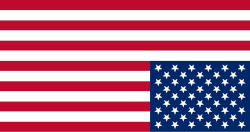
A week that changed the world forever
January 23
2026
Summary:
The episode examines the accelerating strain between the U.S. and key allies as leaders like the UK’s Keir Starmer and Canada’s Mark Carney publicly rebut Donald Trump’s claims about NATO and America’s role in sustaining other countries, framing these moments as evidence of a deeper rupture in trust and the post–World War II international order. Former Principal Deputy Director of National Intelligence Sue Gordon argues that repeated volatility and attacks on institutions at home—from immigration enforcement crackdowns and mass protests to erosion of the rule of law and threats to Fed independence—send global “signals” that the U.S. is becoming less reliable, prompting partners to quietly adjust what they share and how they align. The conversation also explores potential economic and security consequences of this credibility loss, while noting that domestic and allied pushback may reveal limits to Trump’s leverage and create openings for renewed resistance.
00:59
Soundbite
Let me start by paying tribute to 457 of our armed services who lost their lives in Afghanistan.
01:15
I will never forget their courage, their bravery, and the sacrifice that they made for their country.
01:23
There are many also who were injured, some with life-changing injuries.
01:29
And so I consider President Trump's remarks to be insulting and frankly appalling.
01:35
And I'm not surprised they've caused such hurt to the loved ones of those who were killed or injured, and in fact, across the country.
01:46
Nicole Wallace
We see you.
01:47
Hi again, everybody.
01:47
It's 5 o'clock now in New York.
01:49
How tragically and shamefully emblematic of a week that changed the world forever, a final mark of embarrassing punctuation at the tail end of American global leadership.
02:02
That was UK's Prime Minister Keir Starmer.
02:05
He was responding to an assertion Donald Trump made over and over again, one that is as insulting as it is wrong and incorrect.
02:13
in what was almost a spiritual successor to his smear against U.S. victims or people who lost their lives serving in battle in World Wars I, II, and beyond, Iraq and Afghanistan, when he called them suckers and losers, Donald Trump suggested to Fox Business that the U.S. has, quote, never needed its NATO allies, that we basically never got anything from that alliance.
02:39
that our friends stayed, quote, a little off the front lines, he said, in the war in Afghanistan.
02:44
To be clear, that's a lie.
02:46
That's not true.
02:47
It's not accurate.
02:48
Separately today, Canada's Prime Minister, Mark Carney, who gave a speech for the ages in Davos this week, corrected Donald Trump as well when Donald Trump said Canada, quote, lives because of the United States.
03:00
No, said Prime Minister Carney, quote, Canada thrives because we are Canadian, end quote.
03:07
Again, these rebukes from our best friends on the world stage traditionally are echoes of a larger breakup, a larger rupture this week when Donald Trump used our economy and our military as pawns in a vain and selfish, narcissistic campaign to blackmail our best friends and allies into ceding control of Greenland.
03:30
In the end, though, Donald Trump secured what he's trying to brand as a, quote, framework of a future deal, one that at the moment looks a heck of a lot like the current arrangement.
03:41
Part of the deal on my rear end.
03:43
Washington Post reports this, quote, for advocates of taking a tougher line with Donald Trump, the president's climb down regarding the strategic Arctic territory was proof that retaliation, not conciliation, is the answer to his hardball tactics.
03:58
After accommodating Donald Trump on trade and on arming Ukraine, the Europeans finally stood up to him.
04:04
Even more significantly, Donald Trump backed down, end quote.
04:09
As our allies learn to stand up to Donald Trump, the American people are doing the very same thing.
04:16
As we've been covering for the last hour, Donald Trump's targeting of a major American city, the great city of Minneapolis, is sparking thousands of thousands of ordinary Americans to take to the street in frigid temperatures to protest Donald Trump's ice crackdown on asylum seekers and immigrants and protesters and citizens alike.
04:39
All of that contributes to what New York Times columnist David Brooks describes in today's New York Times like this.
04:46
We are in the middle of at least four unravelings.
04:49
The unraveling of the post-war international order.
04:52
The unraveling of domestic tranquility wherever immigration and customs enforcement agents bring their jackboots.
04:59
The further unraveling of the democratic order with attacks on the Fed independents and, excuse the pun, trumped up prosecutions of political opponents.
05:09
Finally, the unraveling of President Trump's mind, end quote.
05:14
All of that happening at once is shaping our future.
05:18
As Robert Kagan writes in The Atlantic, quote, Americans are entering the most dangerous world they have known since World War II, one that will make the Cold War look like child's play and the post-Cold War world look like paradise.
05:34
That is where we start the hour with our dear friend, former Principal Deputy Director of National Intelligence.
05:39
Sue Gordon is here.
05:40
It is so nice to see you, my friend.
05:43
Sue Gordon
Great to be here, even though I still wait for that moment that we're talking about something other than this.
05:50
And thanks for spending a little bit of time after you showed Prime Minister Starmer's remarks, because, you know, I cry periodically on your show.
05:59
I was.
06:04
What I know and our president should know.
06:06
Is the sacrifice of those who have stood shoulder to shoulder with us.
06:14
without demanding credit, without it being their fight, without being browbeaten into it.
06:22
And so of all the things we're going to talk about, I just think for the American people, that is the most ridiculous of statements.
06:36
America is graced with a lot of wealth and resources.
06:40
And we can use our power because, not of our president, but because of America and what we represent.
06:51
But we are where we are because we've had friends.
06:54
And for the people that know, whether you are our allies who have stood shoulder to shoulder, or my colleagues,
07:04
who had seen it, that's just beyond the pale.
07:09
And America, if you listen to me on anything, listen to me on this.
07:16
Without friends, we aren't who we are.
07:23
Nicole Wallace
I think that the history of 9-11 is such a...
07:32
It's a memory hole because it had to be, right?
07:35
To survive the horror of what we saw on our own televisions.
07:39
I was watching the Today Show as it was happening.
07:42
Or if you were a child, right?
07:44
And so you just grew up knowing your parents' horror.
07:48
You know, you felt differently every time someone got on an airplane for a really, really, really long time.
07:55
I remember figuring out how to use those phones.
07:58
They don't have them anymore, but I remember figuring out how to use the phones.
08:03
So I would forgive people for cloudy memories, but what our allies did was, before it had anything to do with Afghanistan, after we were attacked,
08:14
They said, we will come with you.
08:16
I don't even know that it was public who had done it or what we were going to do in response or whether there would be a war in Afghanistan.
08:22
The NATO alliance wasn't about a war that grew to be very controversial and unpopular.
08:28
The NATO alliance was about our country brutally attacked, heartbroken, grieving the loss of all these thousands of innocents, people on airplanes, planes turned into missiles, people jumping out of buildings.
08:43
And they said, whatever it is that you need, we will come with you.
08:47
What does it mean?
08:48
Sue Gordon
And it wasn't just our big named allies.
08:52
It was countries that have no wealth and no stake and still stood with us.
08:58
So, you know, I just, that's a tough one.
09:01
But, you know, I don't want to get lost in any one moment of the Davos event or so many others, even though each one matters.
09:14
What worries me is the pattern we're seeing and the precedent that it creates.
09:18
Davos wasn't about embarrassment.
09:22
It was about signal.
09:23
Allies and markets look to that event for seriousness and predictability.
09:31
And what they saw was volatility.
09:33
And trust is the operating system of democracies and markets and alliances.
09:40
And when leaders treat it casually,
09:43
And casually is a terrible word there because treated it as though it has no meaning.
09:49
The system still runs, Nicole, but it starts throwing errors and those errors compound long before it actually breaks.
09:58
So why?
09:59
You can you can see what he says.
10:00
You can see the ridiculousness of Greenland.
10:03
We're attacking Greenland, taking it by force, buying it and then backing it off.
10:08
And so you have some deal that's exactly what our alliances would have provided us.
10:15
That's not it.
10:17
What is it?
10:20
Is we can't be trusted.
10:22
And you can't surge trust in a crisis.
10:28
When something big happens that requires, we can't say, oh, okay, now you can trust us.
10:34
So it's the compounding of these things, the infrastructure that is being broken little by little, whether it is the undermining of our institutions that we're seeing events in Minnesota, or it is the things we saw there on the stage.
10:50
And to be clear, no matter where you fall on the what policies you like,
10:58
whether you want a stronger America in the hemisphere, whether you want closed borders.
11:05
What I will tell you is how we're getting it now is not the way to do it.
11:08
It represents an impatience and a desire to be able to say that you have something rather than doing the backbreaking physical labor of getting there.
11:17
So people should think of this not just as the event, and I don't want them to look past it, but I do want them to see the precedent that is being set and
11:27
the bigness of what it means systemically, and start thinking about the signals when those errors start compounding.
11:36
Nicole Wallace
Well, let me ask you, I mean, I know enough to be dangerous here, but foreign leaders do so much work
11:46
away from the cameras, before they break with America in front of the cameras.
11:50
So what does it mean that Carney and Starmer, Prime Minister Carney and Prime Minister Starmer, have rebuked Donald Trump all in a span of about 48 hours?
12:02
Sue Gordon
It's breathtaking.
12:04
And on the one hand, I think, and you and I have talked about this before, this administration is so far out over its skeets, and it has invested so little in the infrastructure that actually makes diplomacy and economies work, that it's got a lot of statements and not a lot of heft.
12:26
And I think what you saw for the longest time is people trying to say, man, we just don't want the chop.
12:31
Just stop.
12:33
give it to them.
12:35
So the idea that we have now gotten to the point that they are making a comment on the world stage about America when they know
12:51
that the reason why you don't typically do that is because of the power it gives Russia and China and the choices that it gives the unaligned about who they're going to make to tether their fortunes to.
13:02
So to get them to that brink that they would make that statement or the Danes to say that the U.S. is a security risk.
13:10
There is so much that happens before they would say that because the consequence of saying that in a world order is so profound.
13:20
And it isn't just the who do you trade with?
13:23
It's about what you allow and what you tolerate and how far you can go.
13:28
And so you're exactly right, Nicole, that that is a profound moment that is far more than a rebuke.
13:37
I don't want people to think that it's the same as...
13:40
President Trump saying something mean about Macron's glasses or anything else.
13:47
This is real statesmen talking to their teams about how to craft a moment, knowing that by showing the separation, you may have made the world order a little worse, but still they decided that that risk was more worthwhile.
14:11
Nicole Wallace
It's so stunning.
14:13
And I think we air, not you and me, but we in the media air to separate our, the annihilation of the rule of law at the Donald Trump's Department of Justice from what's happening in terms of the degradation of our alliances.
14:30
Because
14:31
Companies do business here because if someone steals from them or if one of their employees is a victim of a crime, there is a system of laws here that is the envy of the world.
14:45
They blew that up on purpose and on TV and are bragging about it.
14:50
That seems to be now knitted up to our decline on the world stage.
14:56
Sue Gordon
Yeah, and the consequence—
15:00
Again, I think it will be easy to say, well, people are still going to trade with us and people are going to still have meetings with us.
15:07
Yes, they will.
15:09
They have to.
15:10
We're big and we're strong and we're powerful, but we aren't as trusted.
15:16
And even the decline in our institutions, your point about the rule of law is great.
15:20
And I think about my friends that are in the private sector.
15:25
You have a trillion dollar company because you're in the United States and you have the rule of law.
15:31
And so I think when I talk about precedent and looking for the signals of what's happening, don't dissociate what's happening with our institutions from our position in the world.
15:42
And don't be confused because people will still deal with us.
15:46
The question is, what's the world going to look like for democracies and the things that we believe in in terms of economic freedom and political freedom?
15:58
Nicole Wallace
Well, I mean, if you're...
16:01
A person with your job, if you're the deputy director of national intelligence for another country and you're looking at the live feed of Americans out in the street, judges refusing to bring indictments against protesters that the Trump administration is asking for,
16:19
Thousands and thousands of law-abiding American citizens peacefully protesting the streets.
16:24
And this looks like the reporting that my colleague Alex Wagner did in Hungary.
16:28
I mean, this does not look like what people are used to seeing in America.
16:35
How do you assess America right now?
16:41
Sue Gordon
So again, I think you look at that volatility, the erosion, the disconnects.
16:48
And the first thing is you're going to decide whether you want to deal with it and how you want to deal with it.
16:54
What I would do as a principal deputy of any of those countries, I wouldn't spend a lot of time being public about it, but I would prepare for a world where I couldn't trust them.
17:08
And remember...
17:09
There are a lot of people, I think President Trump even did it in one of his first interviews where someone said, what about the things that China steals via cyber theft?
17:20
And the president goes, ah, we do that.
17:22
Everyone does that.
17:23
No.
17:24
No.
17:26
Our intelligence activities are governed by the rule of law.
17:29
So if I'm one of our partners, I have counted on that.
17:34
Even though there have been times that we have betrayed that trust, I've counted on that.
17:39
If you see this happening and the institution's failing and we're doing this within our own country, I'm gonna start saying, hmm, what's the rule that governs our relationships?
17:50
What do I share with them?
17:52
How do I huddle together for warmth with them?
17:55
It's big.
17:55
And much like you cited in terms of what happens before the statement gets made, much of what's going to happen is gonna be done quietly.
18:06
It's just going to, like I said, institutions will exist.
18:14
Trade will happen.
18:16
But democracy will be crumbling.
18:19
Nicole Wallace
I mean, this is a general strike.
18:21
I mean, people like Scott Galloway have talked openly about the impact of economic strikes.
18:29
I mean, if you're looking at America, is that sort of a flashing yellow of a globally destabilizing economic possibility?
18:39
Sue Gordon
Yeah, the cognitive one, just global economic instability, given the bigness and the R importance and, you know, when does our money happen?
18:48
not become counted, when does our banking system not become counted on?
18:51
When you attack the Fed, you know, and you can't have, just at the moment when you have others in the world trying to become the monetary standard, we're going to do things to destabilize ours.
19:05
So I, there are real decisions that these people have
19:14
who used to suspend disbelief because they had the fundamental trust are now seeing that fundamental trust is probably not well-placed and they're going to have to wait and see.
19:25
So will you see economic impact?
19:28
Sure.
19:29
Will you see leadership impact over time?
19:34
But the other thing, and we don't talk about this enough, there are people, you know, I think the world order has broken.
19:42
And I think there are two big polls that have established themselves, and one of them is still trying to decide what the heck it's doing.
19:50
And in every one of our actions that says we can because we can, there are people watching that say, oh, now I know how far I can go.
20:02
And the other thing that where I do think there's hope, because you know me, I can't I can't be on your show without without being hopeful.
20:12
I think there are signs that people are seeing.
20:16
That there is a lot more word than strength.
20:23
And, you know, I go back to Gavin Newsom, you know, fighting against the gerrymandering.
20:31
I see the citizens in Minnesota deciding they're going to protect their neighbors.
20:36
And again, this doesn't have anything to do with immigration policy.
20:40
Nothing.
20:41
This has to do with America kind of finally deciding who we are.
20:47
And I see signs that when we put up resistance, there's less behind it.
20:54
Yeah.
20:54
Yeah.
21:13
Nicole Wallace
Yeah, he only responds to strength.
21:15
You're absolutely right.
21:16
I'm going to take that silver lining and run with it.
21:20
Sue Gordon, thank you very much for starting us off this hour.
21:23
It's so nice to see you, my friend.
21:25
Sue Gordon
Keep it going.
21:25
America counts.
21:26
Nicole Wallace
Love you.
21:28
Love you.
21:28
When we come back, we'll go back to Minneapolis where thousands of Americans are right now on the freezing cold streets.
21:35
of Minneapolis demonstrating against Donald Trump and his brutal ice crackdown in their city.
21:42
Also had an extraordinary and deeply reported new piece of reporting about the FBI during its first year under Kash Patel's leadership.
21:51
The story details how the FBI's employees, both current
21:54
Informer are sounding the alarm about drastic changes that have undermined the FBI's mission and made our country less safe.
22:02
One of the reporters bylined on that piece of journalism will join us.
22:05
Deadline Whitehouse continues after a quick break.
22:07
Don't go anywhere.