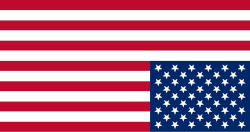
Earmuffs, JD.
Well, gang, today’s the day—who’s excited to hear from the hot new RFK Jr.-approved Advisory Committee on Immunization Practices whether we’re still going to be giving babies their hep B shots? Stay tuned for all the latest remarkable developments in the field of cutting-edge vaccine science. Happy Thursday.

Vice President JD Vance salutes as he exits Air Force Two on September 17, 2025. (Photo by Jessica Koscielniak-Pool /Getty Images.)
We’re Gonna Call It What It Is
by William Kristol
JD Vance is outraged. How dare some people use the term “fascist” to describe the man to whom he has pledged fealty? How dare they apply the term to the movement to which he has hitched his star?
Very few individuals have seen President Donald Trump as close-up as John F. Kelly, the retired Marine Corps general who served for nearly a year and a half as White House chief of staff during Trump’s first term.
Kelly was and is a staunch conservative. In an interview with the New York Times shortly before the 2024 election, he explained that, “In many cases, I would agree with some of his policies.”
In that same interview, Kelly was asked whether he thought Trump was a fascist. Kelly answered by reading aloud a definition of fascism that he’d found online.
Well, looking at the definition of fascism: It’s a far-right authoritarian, ultranationalist political ideology and movement characterized by a dictatorial leader, centralized autocracy, militarism, forcible suppression of opposition, belief in a natural social hierarchy.
Kelly then commented:
Certainly the former president is in the far-right area, he’s certainly an authoritarian, admires people who are dictators — he has said that. So he certainly falls into the general definition of fascist, for sure.... He certainly prefers the dictator approach to government.
Unlike Vance, who saw in Trump a wagon to which to hitch his star, Kelly was at the end of a distinguished career when he joined the Trump administration. He meant to serve his country, not himself. He found that he was working for a fascist.
As for the movement which Vance aspires to lead once Trump leaves the scene, it too has many features of fascism.
In 1995, the Italian novelist and critic Umberto Eco perceived a “ghost stalking Europe (not to speak of other parts of the world).” That ghost was fascism.
Eco explained that “fascism was a fuzzy totalitarianism, a collage of different philosophical and political ideas.” Nonetheless he argued that “in spite of this fuzziness, I think it is possible to outline a list of features that are typical of what I would like to call Ur-Fascism, or Eternal Fascism.”
Among the elements of Ur-Fascism:
- “The first feature of Ur-Fascism is the cult of tradition,” he writes, which implies “the rejection of the modern world.”
- “Ur-Fascism can be defined as irrationalism.”
- “For Ur-Fascism, disagreement is treason.”
- “Ur-Fascism grows up and seeks for consensus by exploiting and exacerbating the natural fear of difference. The first appeal of a fascist or prematurely fascist movement is an appeal against the intruders.”
- “Ur-Fascism derives from individual or social frustration.”
- “At the root of the Ur-Fascist psychology there is the obsession with a plot, possibly an international one. The followers must feel besieged. The easiest way to solve the plot is the appeal to xenophobia.”
- “The Ur-Fascist transfers his will to power to sexual matters. This is the origin of machismo.... Since even sex is a difficult game to play, the Ur-Fascist hero tends to play with weapons—doing so becomes an ersatz phallic exercise.”
- “Fascist schoolbooks made use of an impoverished vocabulary, and an elementary syntax, in order to limit the instruments for complex and critical reasoning.”
Sound familiar?
Twenty years before MAGA came into existence, Eco captured it perfectly. He was able to do so because he had a deep understanding of so many elements of fascism. (His essay is extraordinarily rich and perceptive, and the summary quotations above can’t do it justice. Do read the whole thing!)
Let me end where I began, with JD Vance. Vance asked: “What is it that you want them to do when you call them ‘fascist’?”
We want our fellow citizens to open their eyes to what is happening.
More particularly:
- If you’re a MAGA supporter: Rethink your attachment to a movement to which, for various reasons, you became attracted. Its fascist elements—even its fascist core—are now evident. It’s not something of which you should want to be a part. Leave it.
- If you’re a MAGA fellow traveler: Stop rationalizing, stop justifying, stop enabling it.
- If you’re trying to stay neutral: Stop acquiescing, stop ducking, stop evading responsibility.
- If you’re a MAGA opponent: Oppose the movement firmly and resolutely by all peaceful and political means. Defeat it.
Eco warned in the 1990s of the ghost of fascism re-emerging to stalk the world. That ghost has become a clear and present danger today.
Reminder: Fighting Back Works
by Andrew Egger
Eight months into this administration, Donald Trump and his goons have launched so many attacks on our government and civil society that it’s hard to keep them all straight—the law firms, the colleges, the independent agencies, the media companies (and the telecom giants that own them), and on and on and on. Increasingly, though, they’re all part of one meta-story of how the institutions under threat have responded: Did they curl up and give in, or did they fight back?
On the curl-up-and-give-up front, the deck is getting stacked pretty high. JVL wrote last night about the latest example. MAGA didn’t love how late-night host Jimmy Kimmel treated the Charlie Kirk story in one line of his show’s opening monologue the other day,[^1] so Federal Communications Commission Chairman Brendan Carr decided it was time for the government to get involved. “These companies can find ways to take action on Kimmel,” he said, “or there is going to be additional work for the FCC ahead.” Within hours, Kimmel’s corporate owners had bent the knee, announcing the host was suspended indefinitely.
One thing to keep in mind about these capitulations is how they snowball. They have tended to come in bunches—when one law firm, one college, one media company rolls over for Trump, it compels others to do the same. Meanwhile, with every new capitulation, Trump grows bolder. There’s no organizing principle to any of this other than his own private desire to see how much he can get away with; at times, even he has seemed faintly mystified by the boundaries he’s been able to blow through. “Have you noticed that lots of law firms have been signing up with Trump?” he said at an event back in April. “They give you $100 million and then they announce that ‘but we have done nothing wrong.’ And I agree, they’ve done nothing wrong. But what the hell, they give me a lot of money considering they’ve done nothing wrong.”
This has been most visible in the media space, where Trump has increasingly taken to wielding past capitulations as a cudgel against those who persist in asking him sharp (but entirely standard) questions. Asked by ABC News’s Jonathan Karl this week whether the government should prosecute “hate speech,” Trump mused that they “should probably go after people like you, because you treat me so unfairly.”
“ABC paid me $16 million recently for a form of hate speech,” he went on. “Your company paid me $16 million for a form of hate speech, so maybe they will have to go after you.”
He didn’t even sound angry—just another day at the office.
Every surrender Trump notches makes him push harder for the next. And it’s clearly paving the way for more surrenders to come. But this sense of inevitability is a mirage. Trump’s ability to actually wield retaliatory power is nowhere near as massive as his ability to threaten it. And those who have actually fought back have tended to discover they are not nearly as resourceless as Trump wants them to believe.
Take another recent example. Donald Trump, who wants personal control of the Federal Reserve as much as he wants anything these days, is trying to fire one of the Fed governors, Lisa Cook, on a ridiculous pretext involving mortgage applications on properties she owns. As in Kimmelgate, Trump has relied on a loyal functionary wielding a formerly nonpartisan executive-branch post as a political weapon. In Kimmel’s case, that’s been Carr at the FCC; in Cook’s, it’s been Federal Housing Finance Agency Director Bill Pulte.
Staring down the might of the entire weaponized federal government, it would have been understandable if Cook had decided to go quietly. Instead, she fought back, suing to keep her job while arguing Trump lacked the statutory authority to fire her. And here’s the thing: So far, she’s winning. Her case is far from over, but the first judges who have gotten a crack at it have seemed to agree that under current law Trump can fire her only for misconduct on the job—not mortgage applications filled out before it. Yesterday, Cook attended the latest Federal Reserve meeting, where she cast a legal vote.
And while Cook has been winning in court, the political case against her has been becoming a real headache for the White House. Reporting keeps coming out suggesting Cook may not actually be guilty of the mortgage-paperwork crimes of which Trump and co. have accused her. But you know who just might have committed similar transgressions? Bill Pulte’s own parents, Transportation Secretary Sean Duffy, Environmental Protection Agency Administrator Lee Zeldin, Labor Secretary Lori Chavez-DeRemer, and Treasury Secretary Scott Bessent.
You get the point. If Cook had rolled over and given up, she’d have just added to the snowball effect—one more person contributing to the permission structure for others to do the same. Instead, she’s pushed back, and discovered pushing back is easier and more effective than it looks. Whatever her ultimate fate—her case is heading to the Supreme Court for sure—others should take note. The emperor has fewer clothes than you might think.