
Most of the buildings in the Depression-era Federal Triangle development have an irregular geometry. The Federal Trade Commission office, known as the Apex Building, is a right-angled triangle with its sharpest point rounded off. The Ronald Reagan Building, added in 1998, looks a bit like a stumpy meat cleaver.
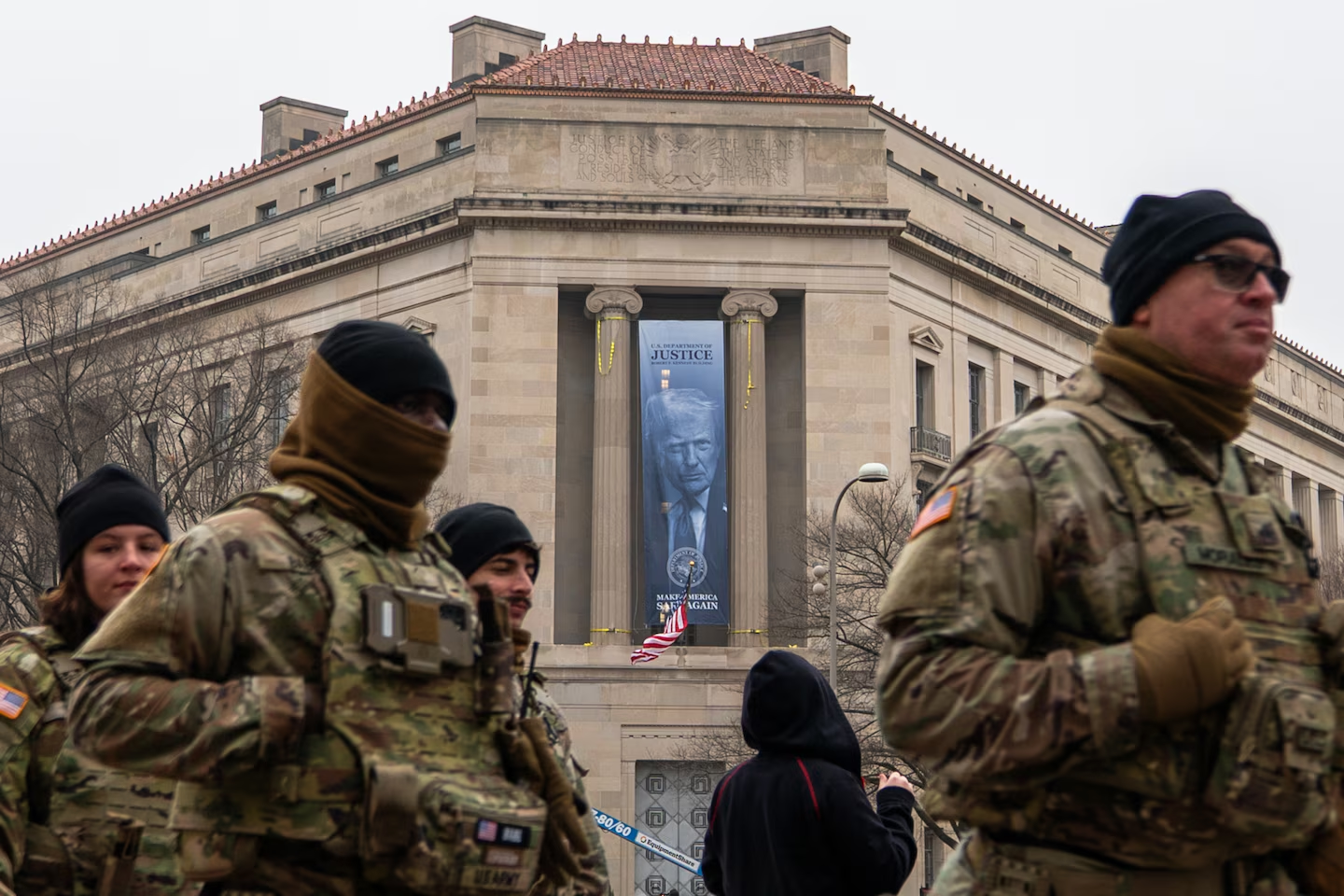
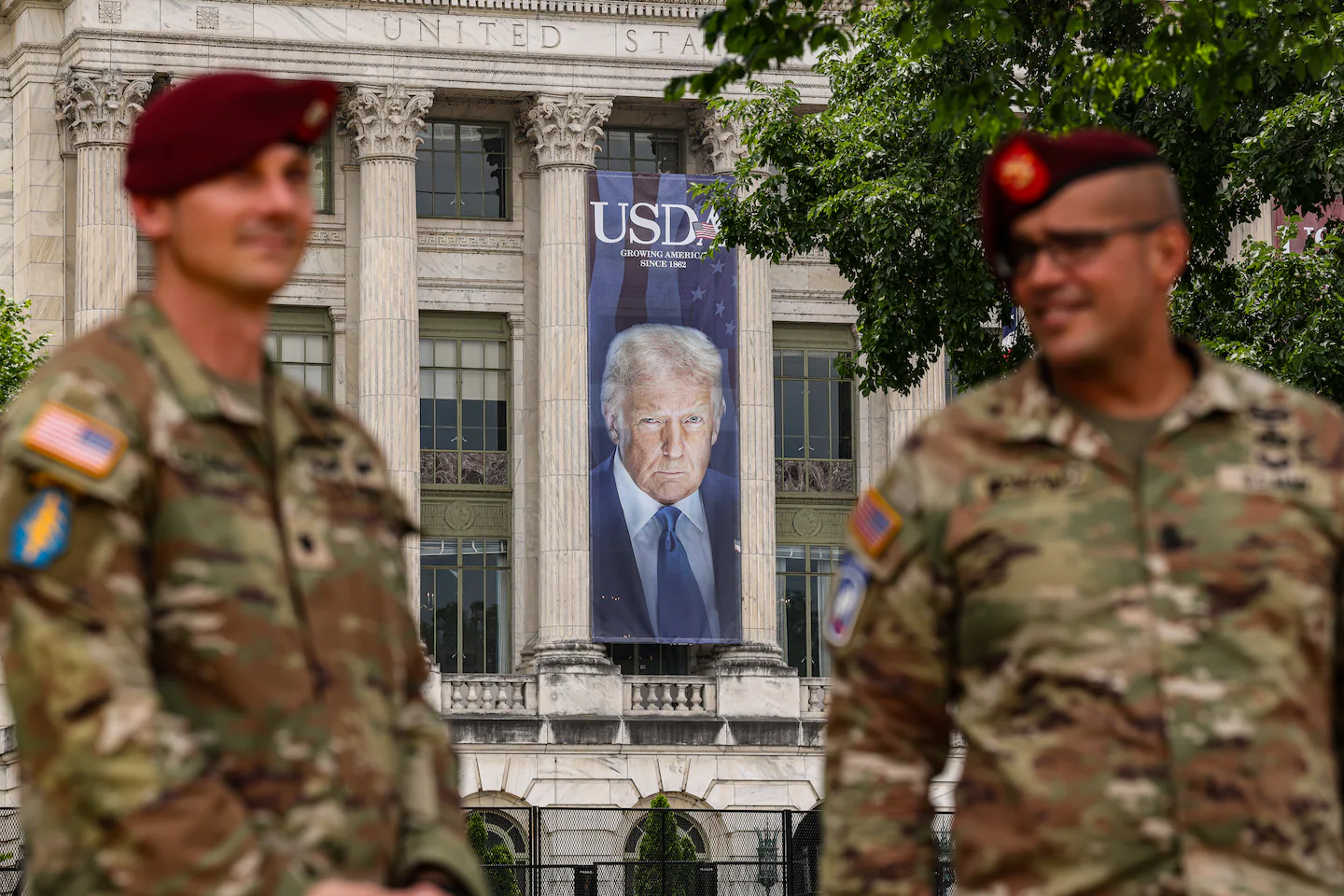
And the Justice Department building, named for the slain senator, former attorney general and presidential candidate Robert F. Kennedy, is a four-sided polygon with corners beveled flat. It is on one of these short, angled planes of the building’s Pennsylvania Avenue facade, that the Justice Department has hung a long, blue-gray banner featuring a gigantic portrait of President Donald Trump. The department, which by long-standing precedent has functioned independently of direct political or presidential control, now joins the Agriculture Department and the Labor Department buildings as a venue for grandly scaled images of the 47th president.
The banner, installed Thursday, hangs between two Ionic columns that define a large porch-like space over a ceremonial entrance to the building. The angle of the building makes this narrow facade unusually visible along Pennsylvania Avenue, the most important symbolic axis in the nation’s capital, connecting the U.S. Capitol to the White House. This is the route followed by inaugural parades and major marches, protests and displays of state power, including the 1865 Grand Review of the Armies after victory in the Civil War.
A movie director looking to shoot a dystopian vision of American authoritarian fascism could hardly find a better spot to stage a speech or rally led by the great leader. This looks like Evita’s balcony, an elevated porch beneath an enclosed space with long, vertical lines that create a tight focus on the banner and the president’s face. The proportions of the building, the color of the stone and the stripped-down classicism of the architecture would make a good substitute for the setting of a famous 1989 speech given by Romanian autocrat Nicolae Ceausescu, who lied shamelessly to his people one last time before being booed offstage, overthrown and summarily executed a few days later by an ad hoc tribunal.
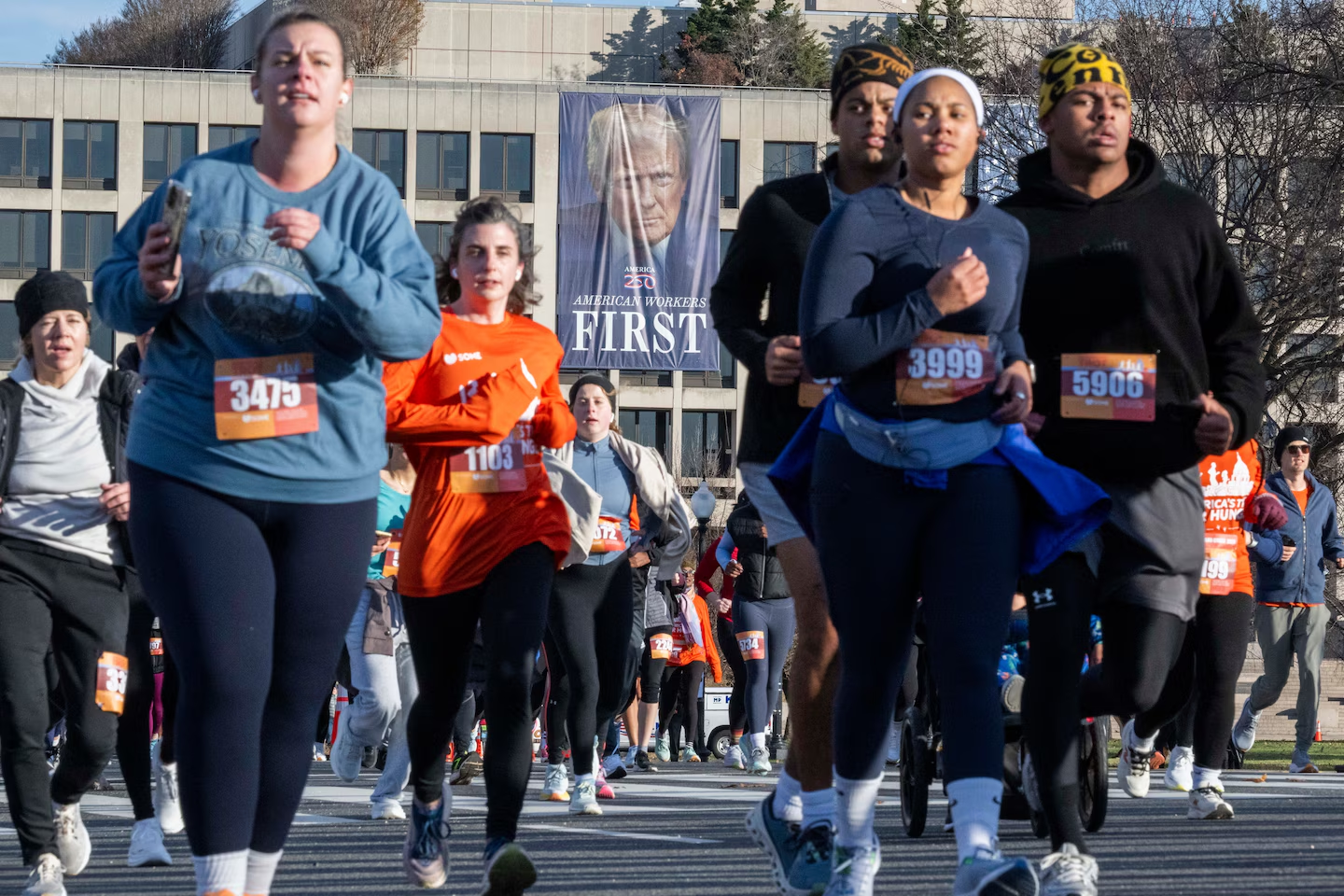
The banner suggests by its placement and composition a culture of surveillance. By positioning it for maximum visibility, the Justice Department has also oriented it to suggest maximum oversight or supervision of the city, and by extension, the people and the country at large. The blue-gray color scheme makes the president seem like a shadowy presence, or omnipresence, in contrast to the sunlight associated with fundamental democratic values: transparency, openness and enlightenment.
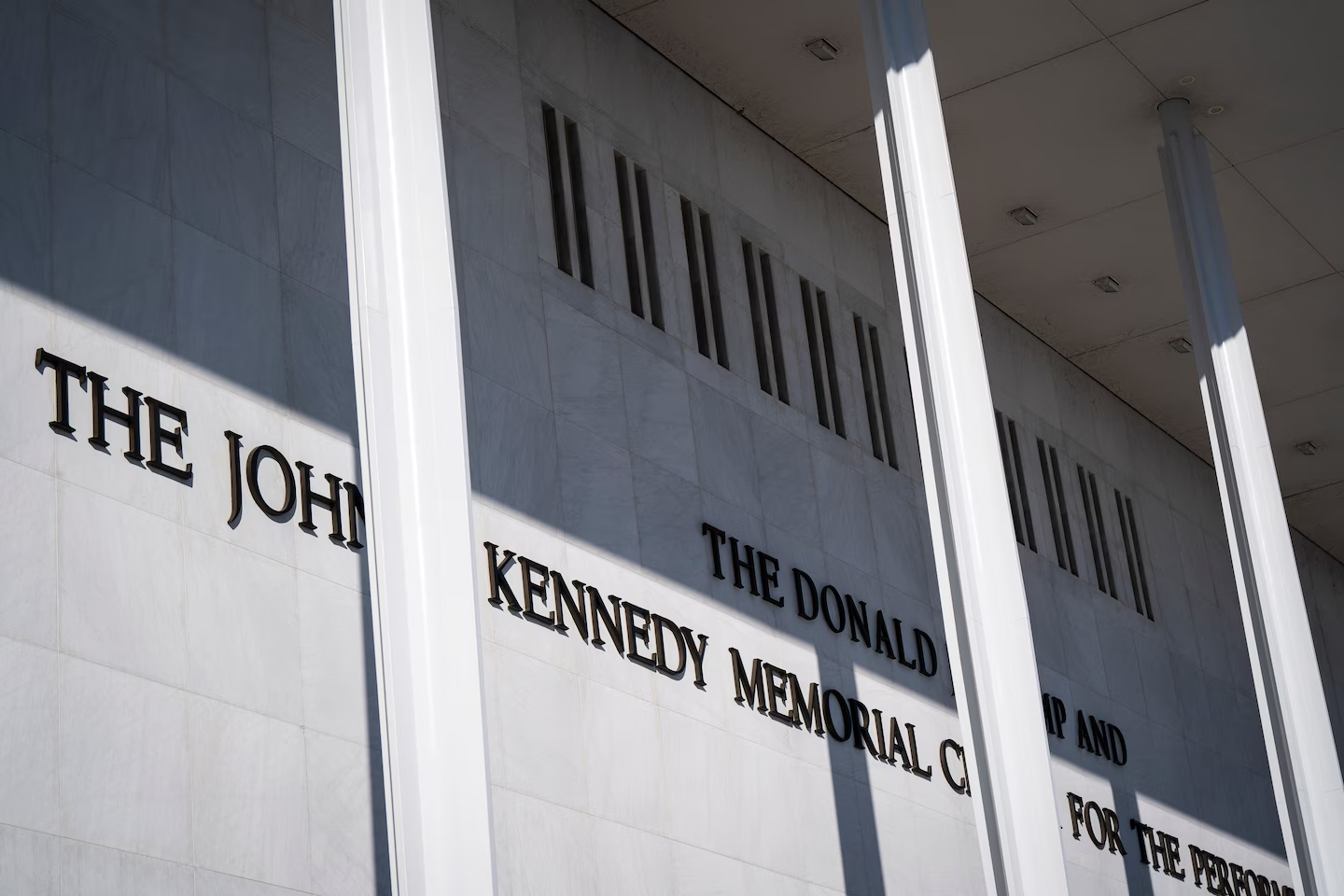
The advance of this shadow has proceeded with shocking speed over the past 13 months. The president, whose business model is based on branding rather than construction or development, has placed his image not just on buildings, but on season passes for the National Park Service and on designs for coins that may be forthcoming (despite a law forbidding it) from the U.S. Treasury. His name has now been added physically to the John F. Kennedy Center for the Performing Arts (a memorial to the 35th president) and the U.S. Institute of Peace. The new banner on Justice’sRobert F. Kennedy building formalizes in iconography what is already the case in practice: The president has repurposed the agency as an instrument for personal political vendettas and partisan vengeance.
As with so many developments in the past year, as the country slides deeper into a new era of authoritarianism, there is a darkly comic element to all of this that stirs a mix of complicated emotions. A year ago, this would have been an absurdity; now, processing that absurdity feels like a kind of compulsory work designed to distract the mind and numb the conscience. Democracies don’t celebrate their national leaders in this overtly hagiographic fashion; but now our democracy does. As the mind moves from guffaws to outrage to the reluctant acknowledgment of a new reality, the shadow world of control, surveillance and uncertainty gains ground.
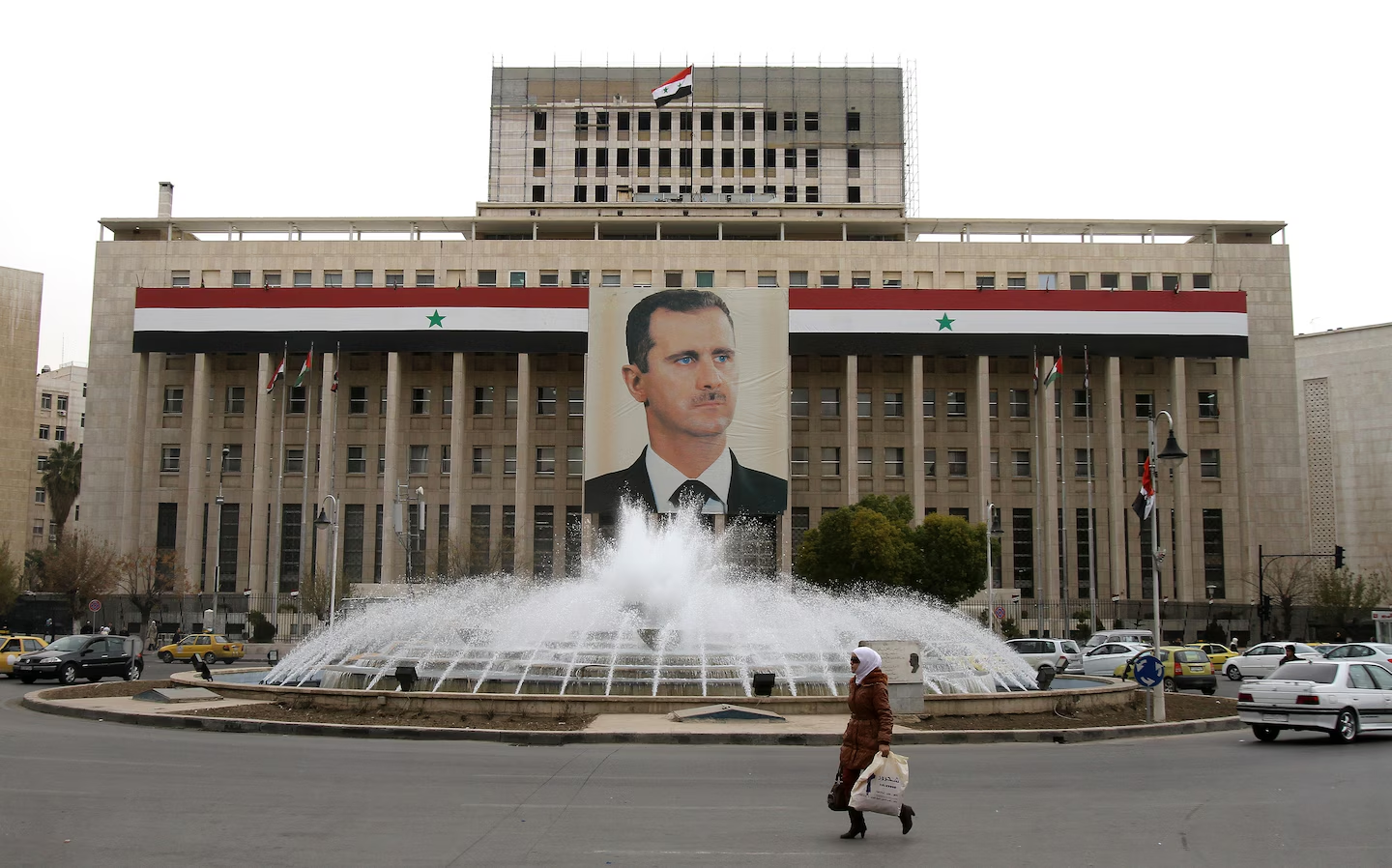
The first time I visited a country where images of an autocratic leader were ubiquitous was in 2004, when I spent a week in the police state of Syria run by Bashar al-Assad. He was a tall, clean-shaven man with no chin. His photograph was often displayed next to that of his father, Hafez al-Assad, who resembled a low-level bureaucrat with a bad comb-over. They were ugly men, inside and out, murderous and brutal thugs. Their omnipresence on the sides of buildings, on banners hanging from lampposts, on the walls of every office no matter how inconsequential its purpose, made their ugliness feel a bit like the weather. You adapted to it, you complained about it (mildly, habitually), you joked about it (tired old jokes that functioned like shibboleths). If you were Syrian, you always cast a quick glance into the shadow spaces before you paid your grim compliments to the Assads.
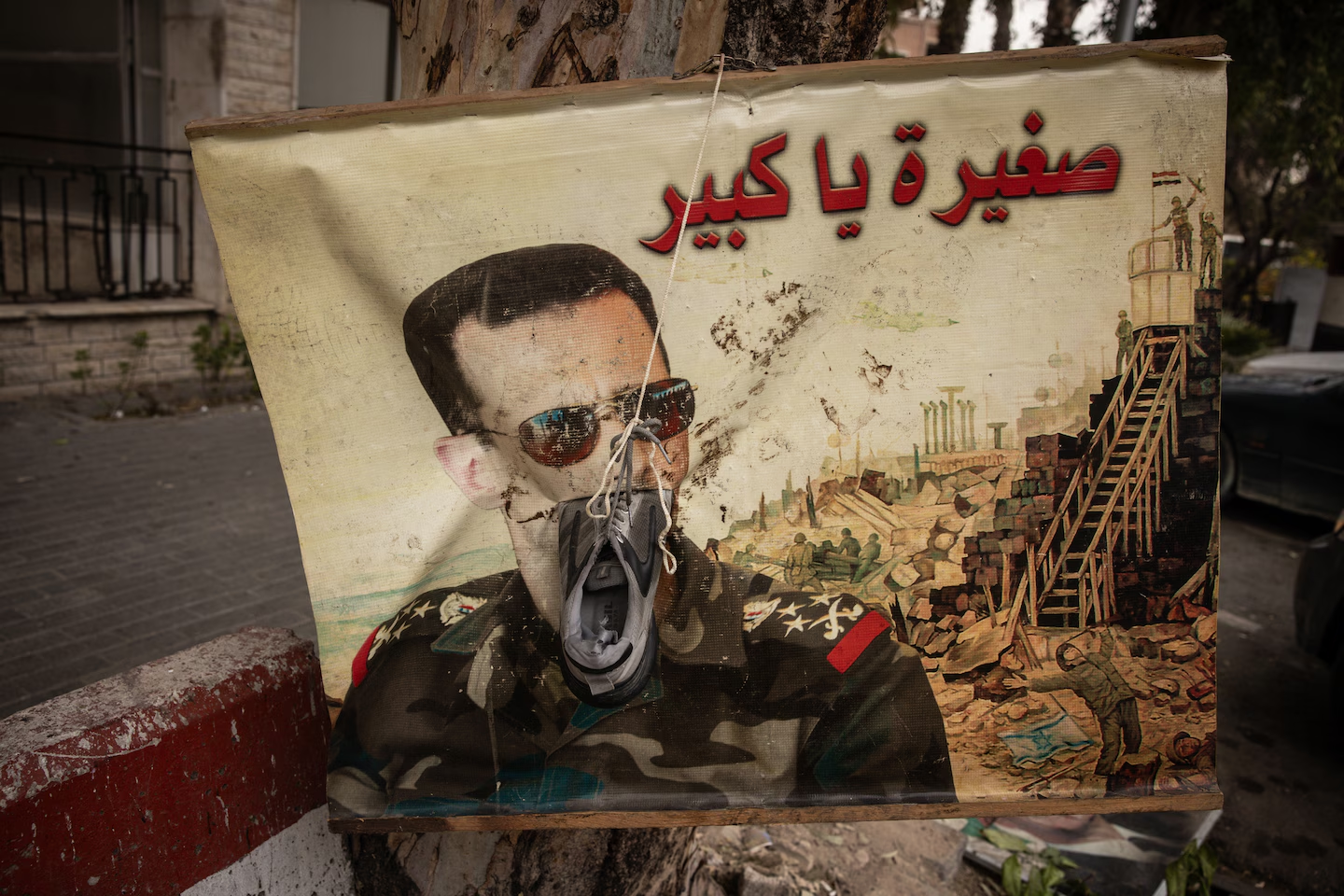
Those banners have come down, as have the images of Ceausescu, along with those of innumerable other tyrants remembered and forgotten by history. Putting these images up feels almost like Chekhov’s Gun, the adage about drama and narrative: “If you say in the first act that there is a rifle hanging on the wall, in the second or third act it absolutely must go off.” When you put this kind of image into democratic spaces, spaces untouched by the monochromatic shadows of unfettered state power, you set up the last act, which is when they inevitably come down. We are in Act I, and Act III will follow. What is troubling are the unknown events of Act II.