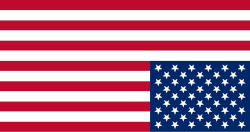
He’s convinced he has to kill liberalism and democracy to realize their benefits.
Lots of grim news to chew over today—and plenty more to follow, with Trump on stage in Davos speaking as we send this—but we’d be remiss not to dwell briefly on one pleasant development yesterday: Lindsey Halligan’s long-awaited, embarrassing exit from the post of U.S. attorney for the Eastern District of Virginia, which took place after a judge told her in no uncertain terms that she was not the acting U.S. attorney and that if she kept signing court filings with that title she would face disciplinary action.[^1]
Halligan leaves the U.S. attorney’s office having utterly failed to accomplish the hatchet-job prosecutions against James Comey and Letitia James Trump put her there to secure—and having suffered untold legal humiliations in the process. So long, Lindsey! Happy Wednesday.
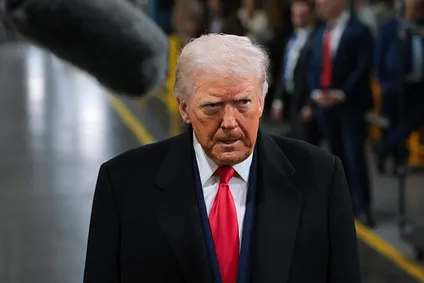
President Donald Trump tours the assembly line at the Ford River Rouge Complex on January 13, 2026 in Dearborn, Michigan. (Photo by Anna Moneymaker/Getty Images)
Puttering Toward Annihilation
by Andrew Egger
Growing up, I never really understood Aesop’s fable about the goose that laid the golden egg. It’s a cautionary tale about greed and hubris: A farmer with a miraculous goose that lays a solid-gold egg every morning gets fed up with passive wealth generation and figures killing the bird will speed things along. But alas: He finds no store of eggs within and realizes he butchered his meal ticket for nothing. The moral’s straightforward, but it never really worked for me as a story. Like, come on: Nobody’s that stupid.
Well, almost nobody, I guess.
As long as I live, I don’t think I’ll get over this pure, dumb fact: Trump told his fans he had to blow up the liberal order because it was the only way to secure the very benefits the liberal order was already bringing us.
Trump insists America needs Greenland as a strategic positioning ground from which to restrain Russia and China in the Arctic. But thanks to the liberal order, this was something we already enjoyed. Through the magic of multilateral cooperation, we were able to treat someone else’s territory as though it were our own for the purposes of military positioning—not by bribing or intimidating them, but because they agreed their interests and our interests aligned.
Trump insists America needs to blow up America’s preexisting economic relationships to ensure America gets an advantageous position in international trade. But America already had such an advantageous position: an orderly world economic system that had lavished previously unimaginable prosperity on America and to the entire globe, with us at the proverbial (and very profitable) head of the table.
It’s not just that Trump had the hubris to think he could hero-ball the country to a better deal by canceling a century of history and starting over. It’s that his own broken personality—his miserable meanness, his dispositional inability to cooperate with and trust others—has always prevented him from understanding what was good about the deal we had to begin with. The idea that multipolar agreements could be better for America, in some cases, than outright ownership—that, say, we already have everything we need from Greenland—he rejects as ridiculous. Ownership, he told the New York Times, is “what I feel is psychologically needed for success.... I think that ownership gives you a thing that you can’t do, whether you’re talking about a lease or a treaty.”
It was a surreal spectacle yesterday, watching former U.S. allies take to the World Economic Forum to proclaim their intention to try to reconstruct a new strategic and economic order that would not require the leadership of the United States. Canadian Prime Minister Mark Carney spoke at length about his country’s year of dark education. “Our old, comfortable assumption that our geography and alliance memberships automatically conferred prosperity and security is no longer valid,” he said. Mid-size countries are realizing that the future will require far more national autonomy: “When the rules no longer protect you, you must protect yourself.”
“Middle powers,” he said, “must act together, because if you are not at the table, you are on the menu.” (Bill has more to say about Carney’s speech in particular further down.)
In the immediate term, this means more and more of our allies giving up on one of America’s prior geopolitical aims: Decoupling from China until it liberalizes at home and/or drops its expansionist aims abroad. Canada dropped some of its trade barriers with China over the weekend, and Europe may not be far behind. In his Davos speech yesterday, French President Emmanuel Macron spoke of his desire to see more Chinese economic investment in Europe.
As we were watching the old U.S.-led order fall apart in real time, the word went out that Trump himself was going to speak to the White House press yesterday afternoon. You had to wonder: How would he respond to the unprecedented crisis he himself had created?
The answer turned out to be: He wouldn’t respond at all, really. Trump seemed basically unaware that anything unusual was afoot yesterday, as he tonelessly free-associated his way through ninety minutes of rambling, shameless self-praise. Asked about the elephant in the room, Trump, as usual, could only frame the matter in terms of his own personality: “They always treat me well,” he said of European leaders like Macron and British Prime Minister Keir Starmer. “They get a little bit rough when I’m not around. But when I’m around, they treat me very nicely. And you know, I like both of them.”
As we send this newsletter, Trump is onstage in Davos right now. He started with a bunch more bragging about his domestic policies and scolding Europe for theirs—“the Green New Scam, windmills all over the place”—before finally getting around to reiterating his claim on Greenland:
I have tremendous respect for both the people of Greenland and the people of Denmark. Tremendous respect. But every NATO ally has an ally to be able to defend their own territory, and the fact is that no nation or group of nations is in any position to be able to secure Greenland other than the United States. We’re a great power, much greater than people even understand. I think they found that out three weeks ago in Venezuela.
But he also appeared to withdraw his threat of using military force to take Greenland: “People thought I would use force. I don’t have to use force. I don’t want to use force. I won’t use force.”
Even now, it’s unclear that he realizes what he’s doing here. Everyone else seems to get the message, though. The world has realized it may have to go on without America’s leadership. It’s not a lesson they’ll soon forget.
Mark Carney Sounds Like a Great American
by William Kristol
As Andrew writes above, the most important speech at Davos yesterday was by Canada’s Prime Minister, Mark Carney. It was not just an excellent speech. It was a very American one.
We citizens of the United States know that everything good doesn’t come from within our own borders. The Capitol contains not only a statue of Abraham Lincoln, but also a bust of Winston Churchill. Our students study The Federalist Papers —and also John Locke and Montesquieu. Our orchestras perform Leonard Bernstein and George Gershwin—and also Mozart and Rossini. We read Herman Melville and Mark Twain—and also Jane Austen and Tolstoy. Our art museums maintain and display the works of Norman Rockwell and Edward Hopper—and also Rembrandt and Cezanne. We watch Casablanca and High Noon —and also British crime dramas on Britbox (or, if your tastes are a little darker, Scandinavian ones on MHz Choice).
We in the United States have understood the foolishness of xenophobia. We have understood that a crabbed or defensive nationalism doesn’t lead to decency or greatness. We know, as they say, that you don’t have a nation if you don’t have borders, but we also know that you can’t have a great nation if you have only borders, and if you’re not open to the contributions from the rest of mankind.
And so at a time when honesty and wisdom are in short supply here at home, we should be especially grateful for candor and enlightenment from abroad. Which brings us to our neighbor to the north.
What did Prime Minister Carney say yesterday, in Davos? You can (and should!) set aside less than twenty minutes to watch his speech. Or you can read the whole thing here.
But here’s one of the more important passages:
Today, I’ll talk about the rupture in the world order, the end of a nice story and the beginning of a brutal reality where geopolitics among the great powers is not subject to any constraints....
But let’s be clear-eyed about where this leads. A world of fortresses will be poorer, more fragile and less sustainable....
American hegemony helped provide public goods: open sea lanes, a stable financial system, collective security and support for frameworks for resolving disputes....
And there’s another truth: if great powers abandon even the pretense of rules and values for the unhindered pursuit of their power and interests, the gains from “transactionalism” will become harder to replicate. Hegemons cannot continually monetize their relationships.
Now, Carney is speaking as prime minister of Canada, not (unfortunately!) as president of the United States. So he focuses on what Canada and other middle powers can do in this new world.
But I also submit to you that other countries, particularly middle powers like Canada, are not powerless. They have the capacity to build a new order that embodies our values, like respect for human rights, sustainable development, solidarity, sovereignty and territorial integrity of states....
We believe that from the fracture, we can build something better, stronger, more just.
This is the task of the middle powers....
The powerful have their power. But we have something too—the capacity to stop pretending, to name reality, to build our strength at home and to act together.
That is Canada’s path. We choose it openly and confidently.
And it is a path wide open to any country willing to take it with us.
Carney is laying out a path for Canada and other nations similarly situated. He’s doing what he can do as that nation’s prime minister. But the truth is that Canada and other middle powers can only do so much to save civilization in a world of unconstrained hegemons.
And Carney knows that. Surely he wants us in the United States to listen to what he’s saying. Surely he hopes that his words may spur us to rethink, to decide that it is not too late to reverse course, not too late to build anew after the fracture, that a path of strength and responsibility is still open to us as well.
The obvious question raised by Carney’s speech for the United States is this: Is such a path of strength and responsibility now irreparably closed to us? Yes, the rupture is real and damaging. But is the United States irreversibly lost? Can we not recover from our self-inflicted wound? Is it beyond the capacity of the United States to once again be an admirable nation and a responsible great power?