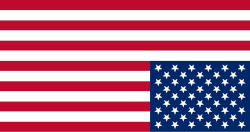
For years Putin has demanded a new global order. Now he has to live in one.
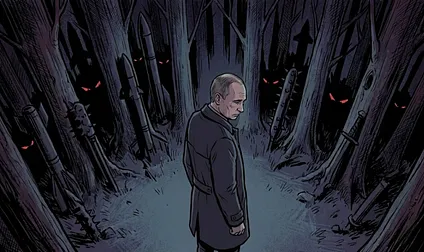
In A Man for All Seasons, Thomas More’s son-in-law William Roper declares he would cut down every law in England to get after the Devil. More replies with one of the great warnings of political drama: “And when the last law was down, and the Devil turned round on you — where would you hide, Roper, the laws all being flat?...D’you really think you could stand upright in the winds that would blow then?”
Vladimir Putin has spent two decades raging against the devil of the liberal international order. Now, thanks to Trump’s foreign policy, he is getting his wish: the dismantling of the US-led system and its replacement with a world where powerful states act freely in their self-proclaimed peripheries with no regard for liberal pieties. A Concert of Europe applied on a global scale: cuius regio, eius imperium.
But the same rules that constrained Putin’s ambitions also constrained a rising China, deterred France from boarding his oil tankers, prevented the US from kidnapping his clients, kept regional powers in check, and gave Russia the predictability it needed to navigate the world as a middling power that rattled its nukes and fiddled with gas switches and not much else. Now that the liberal order is being cut down, the real task for Putin will be to stand upright in the winds that blow.
The World They Wanted
Russian media reported on America’s failed Greenschluss with glee. Though Trump ultimately backed off, the confrontation with Denmark has put permanent strains on the alliance. “Europe’s at a total loss. It’s a pleasure to watch,” declared one newspaper. A commentator on the popular state TV show 60 Minutes put it plainly: “We are seeing the unmasking of the new world. And this is a world in which it is quite good for Russia to be.” If the US takes Western Hemisphere, added the hostess, “there is a consensus that everything else goes to us.” (A bit optimistic I’d say.) Another commentator summed it up: “Everything is simple in this world: whoever has the strength is right.”
But there are also traces of wariness under the gloating. Pro-Kremlin military blogger Aleksander Kots warned that by taking Greenland, Trump “wants to seize the Russian Arctic” and access the natural resources Moscow desires there. He went so far as to call Greenland “an icy noose around Russia’s throat” which Trump has “already begun to tighten.” Putin himself has been notably restrained, offering only a terse dismissal: “It doesn’t concern us at all. I think they’ll figure it out among themselves.”
Since his 2007 Munich speech, Putin has loudly pushed for a multipolar world where great powers do what they want in their own imperial peripheries without sanctions, interference, or sanctimonious lecturing from other powerful states. He criticized the US as a lawless hegemon and predicted that the economic rise of new powers would “inevitably be converted into political influence and will strengthen multipolarity.”
In that sense, Trump’s foreign policy is a gift to Putin’s vision. In his abandonment of Europe, his accommodation of Russia and China, and his revival of the Monroe Doctrine, Trump reinforces the multipolar world Putin has long demanded. If mutual non-interference keeps the US out of Ukraine at the expense of losing clients like Maduro, so be it. And if Trump’s threats weaken NATO or distract America from Europe altogether, better still. That’s a tradeoff Putin seems willing to tolerate.
The approach also legitimizes Putin’s treatment of the so-called Near Abroad as a playground for sabotage, interference, and manipulation. It signals an implicit bargain: you do what you want in your backyard, I do what I want in mine. “My worry is that it may be part of a tacit agreement,” wrote Russia scholar Sam Greene, “by which Washington, Moscow and Beijing agree not to deter one another against interventions in their putative spheres of influence.”
The intellectual foundation of this worldview, if we can call it that, was best expressed by Stephen Miller defending the Venezuela operation on CNN: “We live in a world, in the real world, Jake, that is governed by strength, that is governed by force, that is governed by power. These are the iron laws of the world since the beginning of time.”
As Julia Ioffe pointed out, Russia’s chief Ukraine negotiator Kirill Dmitriev approvingly quoted Miller’s words to buttress Russia’s position: might makes right. This is the permission structure Trump is creating for Putin. The White House’s ideological architect articulates a vision of the world that rejects international niceties in favor of raw power, and Russia’s negotiators immediately pounce on it to legitimize their own war.
The new National Security Strategy suggests the shift is not accidental. The NSS has already been dissected to death, but I would just point to a Brookings analysis that notes the document “does not expressly reference major power competition once”. This is in huge contrast to previous editions. Instead it “adopts a notably more conciliatory tone toward competitors,” suggesting the US “is less intent on strategic competition and more open to spheres of influence.”
Trump as usual has no problem saying the quiet part out loud. When asked about China’s intentions in Taiwan, he told the New York Times that Xi “considers it to be a part of China, and that’s up to him what he’s going to be doing.” (He did add however that he would be “very unhappy” if something happened).
Trump has been equally accommodating toward Russia. After meeting Putin in Alaska last August, he urged Zelenskyy to “make a deal,” telling Fox News: “Look, Russia is a very big power, and they’re not.” Back In February 2024, Trump said that if NATO members don’t pay their dues, he would “encourage [Russia] to do whatever the hell they want.” He framed it as a negotiation tactic on NATO spending, but the underlying premise is that Russia’s aggression is a natural force which the U.S. can choose to enable through its policies.
Spheres of influence only produce stability when great powers mutually recognize each other’s claims, and that recognition relies on Trump’s temperament, not institutional buy-in. If Trump sours on Putin or is replaced by a president not instinctively enchanted by him, we’ll again be in a world where great power rivalry becomes the primary lens for viewing US-Russian relations. That would be a bigger problem for Russia than it ever was during the liberal order.
The Gift of Anarchy
Which brings us back to Thomas More’s warning. Putin wanted a world where powerful states weren’t hemmed in by rules about sovereignty and international norms. He’s getting it, and clearly hopes for a short-term payoff with Trump disengaging from Ukraine and from Europe more generally.
But in a liberal order, with its nuclear weapons and a permanent Security Council seat, Russia could punch above its weight. It could play the victim of Western hypocrisy. It could rail against the bindings of the same system that constrained its enemies. It could invoke international law when convenient and ignore it when not.
In an anarchic spheres-of-influence world, what does Russia have? A slowing economy, a military bleeding out in Ukraine, and a strategic partner in Beijing that increasingly treats it as a junior supplier of raw materials.
That erosion is already underway. Last August, Trump brokered a peace deal between Armenia and Azerbaijan at the White House, sidelining Moscow from a conflict it had mediated for three decades. The agreement dissolved the OSCE Minsk Group, which served as Russia’s primary vehicle for influence in the South Caucasus, and required the withdrawal of Russian forces from the Armenian border. A transit corridor bypassing Russia now bears Trump’s name.
In Russia itself, GDP growth has collapsed from over four percent to under one percent in 2025, with similar stagnation projected for this year. With inflation still high, the central bank has been forced to maintain interest rates above 16 percent. The budget is running deficits as oil revenues decline. Labor shortages are so acute that Moscow has begun talks with the Taliban about importing labor from Afghanistan. The Moscow Times recently reported that Russia is sliding from “managed cooling” into “outright stagnation.”
Meanwhile, Russia’s relationship with China has become, as one analysis put it, “deeply asymmetrical.” China has overtaken the EU to become Russia’s largest trading partner, but Russia accounts for just 3 percent of China’s exports and 5 percent of its imports. Russia sells China oil and gas at steep discounts; China sells Russia the components it can no longer get from the West. At the BRICS summit in Kazan, a journalist asked Putin if Russia felt like “a junior partner” in the China relationship. Putin bristled, but the question would not have been asked five years ago.
The liberal order’s constraints may have shackled Russia’s imperial ambitions, but they were also protecting it from the full implications of its own decay. Russia will find that securing Western non-interference in its sphere comes at the cost of watching China dominating Central Asia, Turkey challenging its position in the Caucasus, and regional powers exploiting the vacuum left by American disengagement from Europe.
Putin is betting he can cut down the liberal order’s laws and stand upright in the winds that blow. It’s a risky proposition for a petrostate with a shrinking population and a broken army. What happens when the devil turns around?